
Late last November, I found myself sitting in a dim, upscale bistro in downtown Seattle for a team holiday lunch, staring at a basket of warm, crusty sourdough rolls like they were a ticking time bomb. My coworkers were laughing, tearing off chunks of bread and slathering them in salted butter, while I felt this strange, prickly heat rising up my neck.
Just a heads up before we get into the weeds—this post contains affiliate links. If you decide to buy something through them, I earn a commission at no extra cost to you. I only ever talk about the supplements and tools that have actually made it into my personal low-GI kitchen lab. Here is the thing: I am not a doctor or a nutritionist. I am just an HR manager who had to learn this the hard way. Please, talk to your own doctor before you change your routine. We are all different experiments running on different biology.
The Irony of the Wellness Manager
There is a specific kind of humiliation in being the HR manager for a corporate wellness program and then failing your own blood screening. I spent years approving health initiatives and step-count challenges, only to have my own labs come back with 'prediabetic' written in bold, unforgiving letters. For the first month, I stayed in deep denial. I told myself it was a fluke—maybe I’d had too much fruit the day before? I kept eating my usual sandwiches and 'healthy' granola bars, but by one rainy evening in February, my follow-up numbers were actually worse. That was the night the panic finally set in.
I realized my metabolism was essentially breaking, and if I didn't figure out how to work with it, I was heading toward a much scarier diagnosis. That is when I turned my kitchen into a low-GI test lab. I started obsessing over the Glycemic Index of Common Foods: Reference Chart, trying to understand why a piece of white bread (with a GI score creeping toward the upper limit of 100) felt like a poison pill, while other carbs didn't.
The Learning Curve: GI vs. GL
Early this spring, I finally understood the math of it all. The Glycemic Index (GI) is a scale from 0 to 100, and my goal was to stay below the Low Glycemic Index threshold of 55 whenever possible. But the real game-changer was learning about Glycemic Load (GL). It accounts for the portion size, which is why I can have a small serving of berries but have to run away from a single bagel. It felt like I was learning a new language—one where 'brown' didn't always mean 'safe' and 'sugar-free' was often a lie.
I started deconstructing my meals like a metabolic puzzle. If I wanted to survive a social life in Seattle—where every meeting seems to happen over coffee or craft cocktails—I had to learn how to navigate a restaurant menu without a panic attack. This was especially hard when I had to travel for work. Most advice tells you to 'check the menu beforehand,' but if you are a traveling business consultant or a busy manager, you are often at the mercy of the client’s choice. You walk into a high-end steakhouse or a trendy fusion spot with zero prep time, and you have to make a split-second decision while someone is asking you about Q4 projections.
My 'Fiber-First' Restaurant Rule
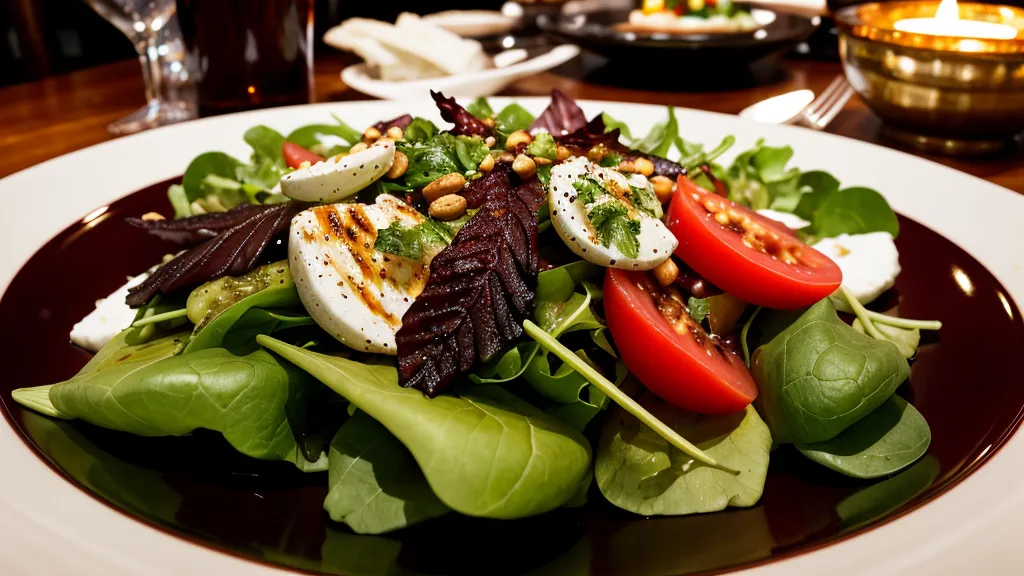
About six months into my new routine, I developed what I call my 'fiber-first' strategy. It is the only thing that saved me during a series of client dinners this past May. The rule is simple: nothing hits my stomach until I’ve had a significant amount of fiber. I will literally order a side of sautéed spinach or a plain green salad before the appetizers even arrive. I’ve learned that consuming fiber-rich greens before a carbohydrate can significantly dampen the glucose spike.
I learned this lesson the hard way last winter. I thought I was being 'good' by ordering a balsamic-glazed salmon salad. It sounded healthy, right? Wrong. The dressing was basically liquid sugar. An hour later, during my 3 PM budget meeting, I hit a wall so hard I could barely form a sentence. My brain felt like it was wrapped in wet wool—a classic glucose crash. Now, I always ask for oil and vinegar on the side. It is a small, slightly annoying request, but it keeps me from falling apart in the mid-afternoon.
To help stay on track, I also started incorporating a morning ritual that helps me feel more resilient before I even hit the suburban commute. I stir a few liquid drops of a plant-based support called Sugar Defender into my coffee. I’ll be honest: the scent is earthy and very herbal, almost like a damp forest floor, but it’s become a grounding ritual for me. It contains 24 plant-based ingredients, and I like that it doesn't feel like a heavy pharmaceutical. Plus, they have a 180-day money-back guarantee, which appealed to my HR-manager brain—I like a solid policy. It’s not a magic bullet, but it’s a tool in my kit that helps me feel a bit more stable when I know I’m heading into a day of unpredictable meals.

Deconstructing the High-End Menu
When you are at a high-end restaurant with a client, you can't always be the person who makes a scene about the menu. So, I’ve learned to look for 'hidden' low-GI gems. I look for proteins that aren't breaded—think grilled scallops or roasted chicken—and I swap the potato for double greens. Most chefs at these places are happy to do it, and it looks a lot more 'executive' than picking the breading off a piece of fried fish.
If you're struggling with the same cravings I had, I found that focusing on How to Add Fiber to Meals for Better Blood Sugar Stability Daily really changed the way I viewed my plate. It wasn't about what I was taking away (the bread); it was about what I was adding (the protection). When I’m at a restaurant now, I watch the server carry a tray of artisan rolls past my table, and I silently recite my mantra: stable energy feels better than white flour. It doesn't mean I don't miss the sourdough—I miss it every single day—but I don't miss the way it made me feel.
For those times when a large meal is unavoidable—like a wedding or a mandatory multi-course banquet—I’ve looked into things like using GlucoBerry for better glucose management. While I personally prefer the daily routine of my liquid drops, some people find that targeted berry-based support works better for their specific system. It's all about finding what fits your lifestyle and your body’s unique response.
The Result: Calm, Sustained Clarity
The biggest change isn't actually the numbers on the lab report, though those have significantly improved. The biggest change is the absence of the 'food coma.' You know that heavy-lidded, desperate need for a nap that hits about forty-five minutes after a big pasta lunch? That’s gone. In its place is a calm, sustained clarity that lasts until I get home in the evening. I can actually focus on my family instead of just trying to keep my eyes open on the couch.
Look, navigating a restaurant menu with prediabetes is a skill, just like anything else. It takes practice, and you will definitely have moments where you mess up and order the glazed salmon. But the more you treat your body like a lab and less like a garbage disposal, the easier it gets. If you're looking for a place to start with a daily support tool that fits into a busy schedule, I really do recommend checking out Sugar Defender. It’s been a reliable part of my morning for months now, and it helps me face those glossy menus with a lot more confidence.
I’m still the woman who asks for extra greens, and I still occasionally stare longingly at the bread basket. But I’m also the woman who has her energy back. And for me, that’s a trade I’ll make every single time.