
A kitchen scale and a good guess will tell you two completely different stories about the same bowl of rice. Three years into managing prediabetes, that gap between what I assumed I was eating and what I was actually eating turned out to be the whole ballgame. Out of every gadget I've bought since my diagnosis, only three earned permanent space on my counter: a digital scale, a spiralizer paired with a mandoline, and a chef's knife that surprisingly replaced my blender almost completely. Low-GI cooking, in my kitchen anyway, never turned into a full pantry overhaul. Glucose control came down to three specific pieces of kitchen gear, and a handful of rules for when to actually use them.
Before I bought any of them, I tried the shortcut every prediabetes ad promises: a meal-kit subscription built for diabetics, portions pre-measured and delivered to my door. It solved the guessing problem and created a new one — the food tasted like cardboard, and I canceled it within a handful of boxes. That failure is actually what pushed me toward tools instead of a service. A subscription that tastes bad gets quit, and then you're right back to eyeballing your plate.
The Scale: What to Weigh in a Low-GI Kitchen
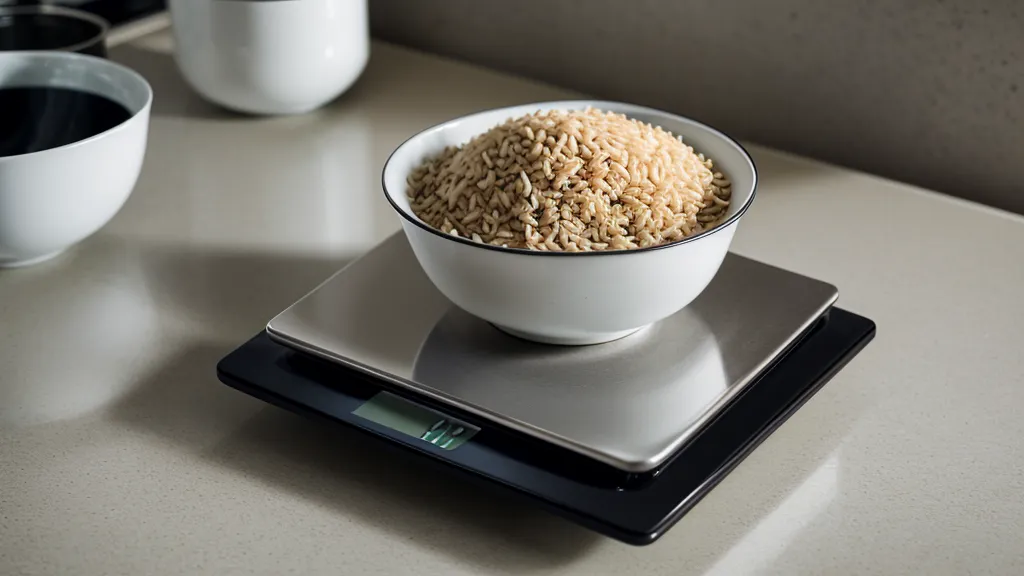
The scale earns its spot because the Glycemic Index only tells half the story. A food can score low on that index and still spike you if the portion is three times what the index assumes — that's glycemic load, and I've walked through the actual math of calculating glycemic load in my own kitchen elsewhere, so I won't repeat the formula here. What matters for the tool question is simpler: if more than about a quarter of my plate, by weight, is a starchy carbohydrate — rice, pasta, bread, potatoes — I weigh it. Leafy greens, most non-starchy vegetables, and protein don't go anywhere near the scale anymore, because the swing in load from a slightly bigger handful is small enough not to matter.
My college friend Noel, who lives across the lake in Bellevue now, turned this into an actual spreadsheet the first time I complained to her about it over coffee — that's just how her brain works, and I was grateful for it, because the pattern she found matched what I'd already been doing by feel for months. Starches get weighed. Everything else gets a reasonable guess.
A Spiralizer Solves a Problem a Recipe Can't
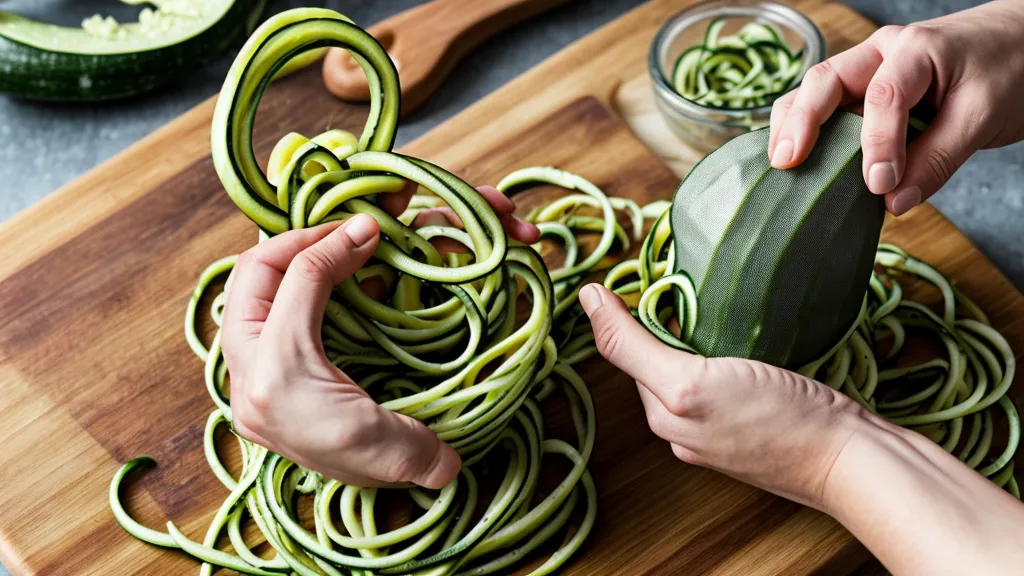
Texture, not nutrition, is why the spiralizer and mandoline stayed on the counter. Swapping noodles for vegetable ribbons only works long-term if the substitute actually feels like food you chose, not food you're missing something better than. Zucchini, daikon radish, and carrot hold their shape well enough to stand in for pasta shapes; anything softer, like a cooked sweet potato, turns to mush in a spiralizer and isn't worth the mess. My rule of thumb: if a raw vegetable snaps cleanly when you bend it, it's firm enough to spiralize.
Cooling and reheating starchy foods changes how your body handles them, too — resistant starch is the term for it, and the biology behind why is its own rabbit hole I'm not getting into here. The mandoline earns its keep for a smaller, more practical reason: uniform, thin slices cook evenly, which means less guessing about whether the radish on the edge of the pan is actually done.
Skip the Blender, Reach for a Knife Instead
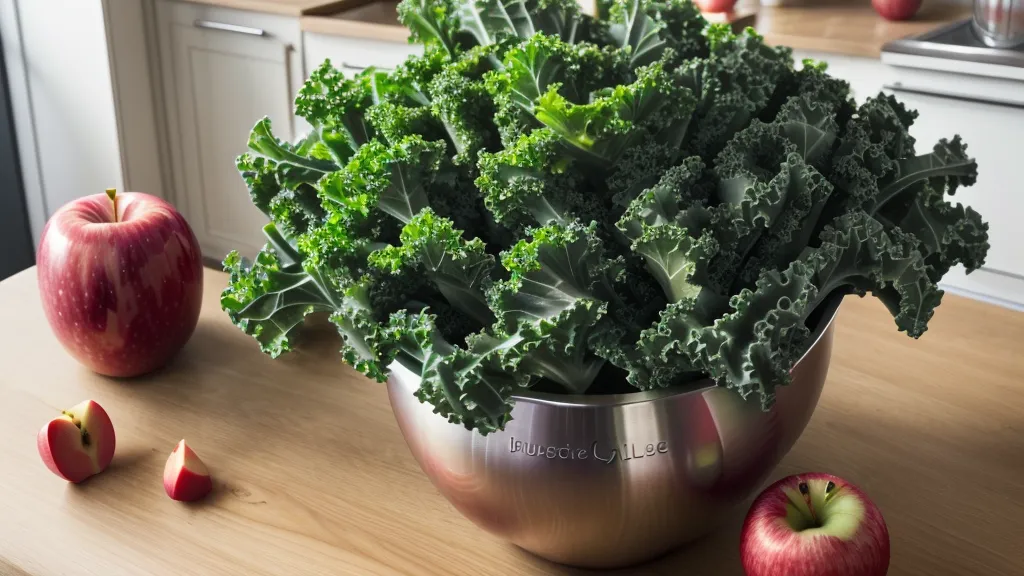
There's real research behind why turning fiber into a liquid changes how fast it hits your system — I get into the actual mechanism in a separate piece, since it's not a one-sentence explanation. The kitchen-level version is what actually changed my mornings: if I can't identify a single ingredient by texture within the first few sips of a smoothie, I've over-processed it, and I'll be hungry again within the hour. A knife and a cutting board became my default instead. Kale and apple chopped into a chunky slaw behaves completely differently in my body than the same two ingredients liquified.
Amara, someone I met at a nutrition talk at the library and still trade notes with, asked me once whether I'd still be doing any of this in five years, or whether it was just a new obsession filling in for the old one. Fair question, and a harder one than it sounds. My answer, most days, is that the tools stuck around because they save decision energy, not because they're exciting. There's one particular Wednesday I still think about — a morning that came and went without the thick, cottony heaviness behind my eyes that I'd stopped even noticing until it wasn't there anymore. That's the kind of proof that keeps a chef's knife on the counter instead of back in the drawer.
For anyone curious how supplements fit into a whole-food approach like this one, I looked at that tradeoff separately in a piece on why I chose Sugar Defender over Gluco6 for my own morning routine. It's a smaller piece of the puzzle than any of these three tools, in my experience.
A Simple System, Not a Diet Overhaul
None of this requires replacing your kitchen. A scale for starches, a spiralizer and mandoline for texture, and a knife instead of a blender for everyday meals — that's the entire system, and it takes up less counter space than the appliances it replaced. Three years of testing this in my own kitchen taught me that the tool matters less than the rule attached to it. Buy the scale, but decide in advance what you're actually going to weigh with it, or it becomes clutter within a month.
If you want the specific before-and-after numbers behind all of this, I laid those out in detail in my 90-day tracking notes. I'm not a dietitian, and nothing here replaces an actual conversation with your own doctor about your own numbers — these are just the three tools that made the difference in my kitchen.