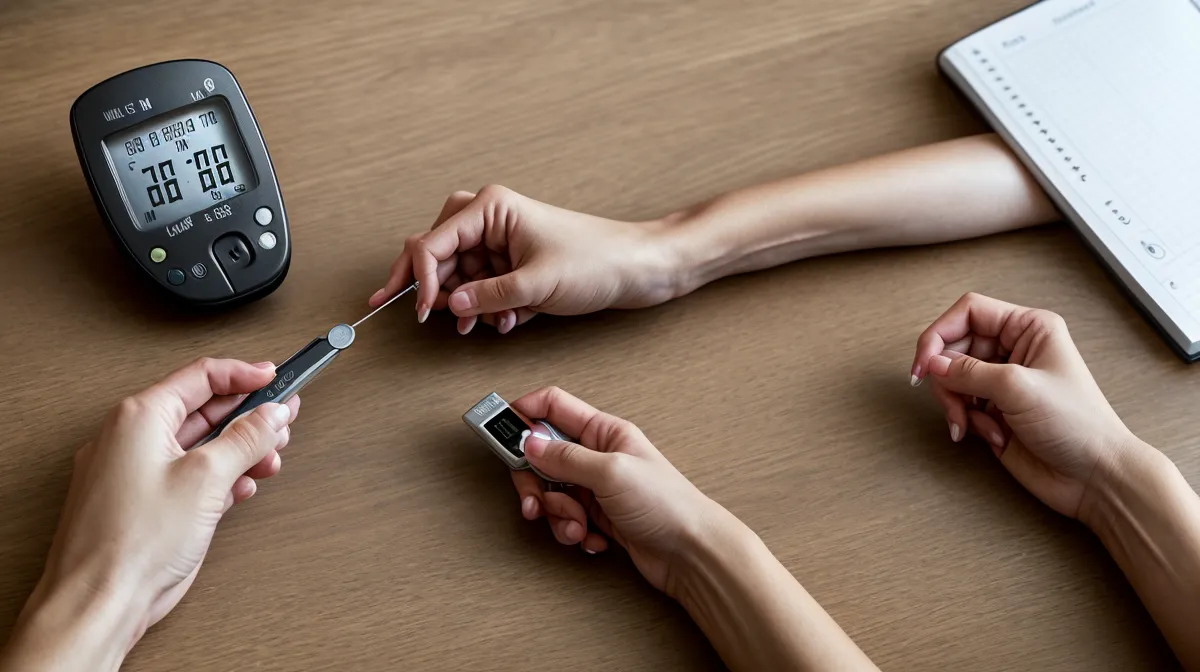
One rainy Tuesday afternoon last month, I sat in my Seattle office breakroom, hiding my new glucometer behind a stack of wellness brochures Iâd written myself, feeling like a complete fraud. There I was, the woman responsible for our companyâs 'Health and Vitality' initiative, sneaking a finger prick under the table like I was committing a corporate crime. Itâs funnyâor maybe just cruelâhow life works. Iâd spent years telling employees to 'know their numbers,' and then my own A1C came back at that dreaded 5.7% threshold.
That 5.7% is the official American Diabetes Association line for prediabetes. It sounds small, doesn't it? Like a bad grade on a quiz you can just retake. But after my follow-up numbers actually worsened in mid-November, I realized my 'intuitive eating'âwhich mostly involved sourdough from the bakery down the street and 'healthy' grain bowlsâwas failing me. I didn't just need a diet; I needed hard data. I needed to understand why my blood sugar was spiking even on days when I thought I was being a 'wellness rockstar.'
The Learning Curve: Choosing Your Lab Equipment
When I first walked into the pharmacy section of the Costco in Sodo, I was overwhelmed. There are dozens of meters, and they all look like little 90s-era pagers. Iâm not a doctor, and I have zero medical training, so I just wanted something that worked. Look, the most important thing I learned is that you don't need the most expensive model, but you do want one that meets the ISO 15197:2013 accuracy standard. That basically means 95% of the meterâs results are within a very specific, tight range of a lab test. When you're trying to figure out if a sweet potato is your enemy, you want that 95% confidence.
I started my 'Kitchen Lab' in early January. I bought the meter, a box of lancets (the little needles), and way too many test strips. Here is the thing about test strips: they are the 'printer ink' of the medical world. Theyâre where the cost adds up, so Iâve learned to be precious with them. But early on, I used them constantly because I was desperate to see the invisible story my blood was telling.
The Ritual: How to Actually Test (Without the Drama)
The first time I had to prick my finger, I sat at my kitchen island for ten minutes just staring at the lancing device. I felt like such a baby. But then I remembered a tip from a forum: the side of the fingertip has way fewer nerve endings than the pad. So, I took a breath and pressed the button. The sharp, metallic click of the lancet followed by the sight of a tiny, perfect crimson bead blooming against my thumb changed everything. It didn't even really hurtâit was just... information.
If you're doing this for the first time, hereâs my HR-manager-approved workflow:
- Wash your hands with warm water. This isn't just for germs; the warmth gets the blood flowing so you don't have to squeeze your finger like a tube of toothpaste.
- Skip the alcohol wipes unless youâre on the go. They can actually dry out your skin or, if the alcohol isn't dry, mess with the reading.
- Prick the side of your finger, near the nail.
- Touch the edge of the test strip to the bead of blood. Most modern strips 'sip' the blood up automatically.
I usually keep a little notebookâmy 'Lab Log'âright next to my Kitchen Lab notes for calculating glycemic load. It helps to see the food and the number side-by-side.
The Big Reveal: Why the Two-Hour Rule is Often a Lie
Standard advice usually tells you to test exactly two hours after you start eating. Thatâs the 'postprandial' window clinicians look at. But about eight weeks in, I realized that for me, the two-hour mark was often a total lie. Iâd test at 120 minutes and see a nice, safe 110 mg/dL, and Iâd think, 'Great! That pizza was fine!'
But I felt terrible. I felt that familiar, heavy-eyelid slump. So, one day I started testing at 45 minutes, 60 minutes, and 90 minutes. What I found was shocking. My true glucose spike frequently occurs significantly earlier, around the 60-minute mark, depending on how much fat or fiber Iâve mixed in. By the time two hours rolled around, my body had already produced a massive insulin surge to clear the sugar, so the 'safe' number I saw was just the aftermath of a metabolic car crash.
If you only test at two hours, you might be missing the very spikes that are keeping your A1C high. I recommend testing at one hour and two hours a few times just to see when your personal peak happens. Every body is differentâIâm just a woman with a spreadsheet, but Iâve learned that my 'peak' is a moving target.
Kitchen Lab Discoveries: The Oatmeal Betrayal
The hardest day was a rainy Wednesday in March. I had a bowl of 'healthy' steel-cut oats with a splash of almond milk. I figured I was being the poster child for prediabetes management. An hour later, I was staring at a '142' on the screen and realizing my 'healthy' morning oatmeal was actually a metabolic disaster in disguise. I felt like crying. How could something so boring be so bad for me?
On the flip side, I had a surprise finding with sourdough. Iâd been terrified to touch bread, but I tried a small slice of authentic, long-fermented sourdough with plenty of butter and an egg. My spike? Barely hit 115. Meanwhile, a 'safe' brown rice bowl from a local cafe sent me into the 150s. This is why the meter is essential. If I had just followed a generic list of 'good' and 'bad' foods, Iâd still be eating the oatmeal that was hurting me and avoiding the bread that my body actually handles okay.
I've also started being more proactive about my routine. For instance, I noticed that if I take a quick stroll around the block after lunch, my numbers stay much flatter. Itâs why I wrote about how to start walking after meals to lower glucose spikes, because that data on the meter screen doesn't lie. Seeing the number drop after a 15-minute walk is the best motivation Iâve ever had.
Moving From Fear to Curiosity
Iâm not going to lieâI still miss white bread. I miss being able to eat a bagel without a 'strategy.' There are days when I look at my glucometer and want to throw it out the window into the Sound. But most days, Iâm grateful for it. It has turned my fear into a series of experiments. Itâs not a judge of my failures; itâs just a tool for my recovery.
Iâve even started adding some support to my routine to help things along. Since Iâm all about that 'lab' life now, Iâve been very picky about what I add to the mix. I actually shared the story of why I added GlucoBerry to my low-GI kitchen lab routine a while back, mostly because I wanted to see if it would help with those stubborn morning numbers.
Look, if youâve just been told your numbers are heading in the wrong direction, please don't panic. Get a meter. Start testing. Talk to your own doctor about what your specific targets should be, because Iâm just an HR manager who got a wake-up call. But don't be afraid of the data. The data is what gives you your power back. You aren't 'failing' a blood test; you're just learning how to fuel the specific, unique, slightly stubborn machine that is your body.
Itâs a journey. Some days the bead of blood is hard to get, and some days the numbers make you want to scream. But every time you prick your finger, youâre choosing to see the truth. And in my experience, the truth is the only way to actually get those numbers back where they belong.