Late August in Seattle is usually beautiful, but all I can remember is the smell of glazed donuts in the office breakroom. I was standing there, staring at that pink box like it held the secrets to the universe, while my stomach let out a growl so loud I was sure my assistant could hear it from the next cubicle over.
It had been exactly three weeks since my wellness screening. Look, there is a specific kind of professional embarrassment that comes with being the HR manager for a corporate wellness program and failing your own blood test. I was the one who approved the budget for the biometric screenings, yet here I was, prediabetic and terrified of a piece of fried dough. I didn't touch the donut, but I went back to my desk and ate a 'healthy' honey-oat granola bar instead. An hour later, I was so dizzy I could barely read my emails. That was the moment I realized my 'healthy' habits were actually breaking me.
The Irony of the Wellness Manager
I spent the first month in total denial. I thought if I just worked harder or slept more, my numbers would magically fix themselves. But when my follow-up labs in early November came back even worse, the panic finally set in. I had to face the reality: I had no idea how to actually feed myself. I've spent years telling employees to 'eat better' and 'take the stairs,' but I didn't understand the first thing about how my body processed sugar.
I started researching the Glycemic Index (GI), and it felt like learning a foreign language. I found out that the scale uses pure glucose as a reference point with a value of 100. Everything else is measured against that. To keep my blood sugar from resembling a roller coaster at the Puyallup Fair, I had to aim for the Low Glycemic Index Threshold, which is 55 or less. Anything in the Medium Glycemic Index Range of 56 to 69 was risky territory for me, and the High Glycemic Index Threshold of 70 or above? That was essentially a 'do not enter' sign for my metabolism.
I’m not a doctor, and I have zero medical training. I’m just a woman who realized she was drowning in 'hidden' sugars while trying to be healthy. Please, talk to your own doctor before you overhaul your life like I did. Every body is different, and what worked for my stubborn Seattle metabolism might not be what your system needs.
The Kitchen Lab Phase
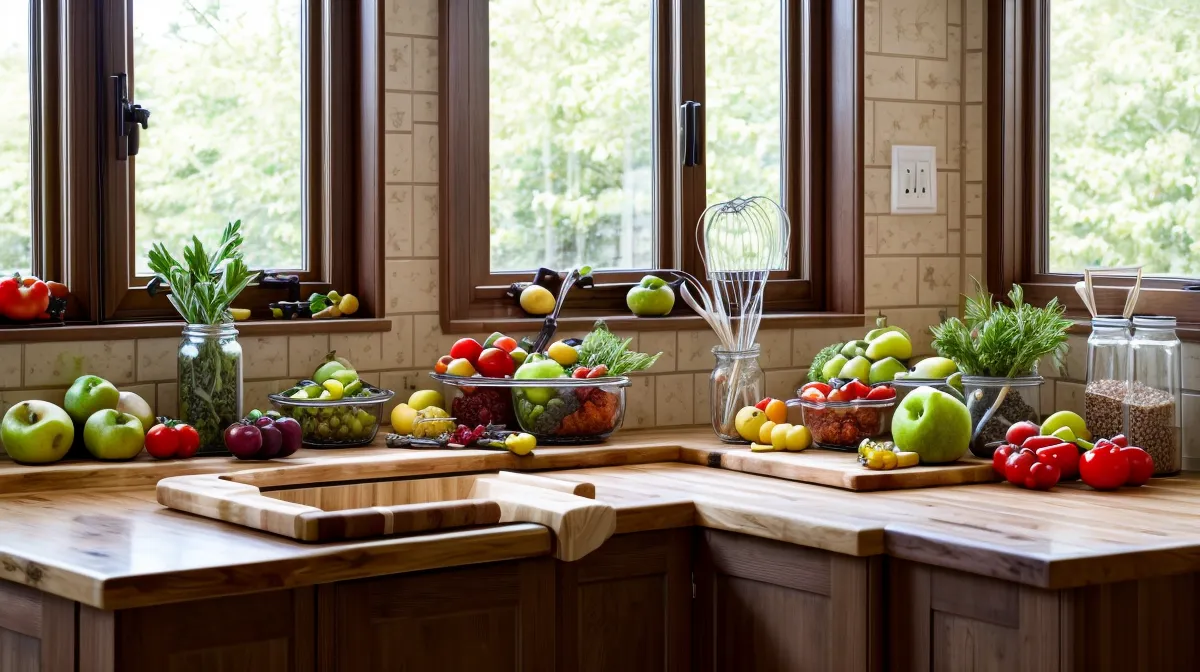
By early November, my kitchen had turned into what I called the 'Low-GI Lab.' I stopped looking at calories and started obsessing over Glycemic Load (GL). While GI tells you how quickly a food spikes your sugar, GL takes into account the portion size. It’s calculated by multiplying the GI by the grams of carbohydrate in a serving and then dividing by 100. If you’re curious about the nitty-gritty of that math, I actually wrote a whole guide on The Kitchen Lab Tutorial: How to Calculate Glycemic Load for Your Favorite Recipes.
Here is the thing I learned the hard way: fiber isn't enough. For years, I thought if a snack had fiber, I was safe. I was eating these high-fiber crackers from Costco by the boxful, wondering why I still felt like I needed a nap at 3:00 PM. I had to stop prioritizing raw fiber intake for satiety and start pairing my snacks with moderate amounts of saturated fat.
I know, we’ve been told for decades that saturated fat is the enemy. But in my 'lab,' I discovered that a little bit of fat—like a slice of full-fat cheddar or some heavy cream in my tea—did more to flatten my glucose curve than a mountain of dry bran flakes ever could. The fat slows down the gastric emptying process, meaning the sugar from the carbs hits your bloodstream in a slow trickle rather than a tidal wave. It was a total paradigm shift for me.
The Discovery: Snacks That Actually Work
After about six weeks of trial and error, I finally found my 'holy grail' snacks. These aren't the sad, cardboard-tasting rice cakes of the 90s. These are things I actually look forward to eating.
1. The Apple and Almond Butter Power Couple
I used to eat an apple by itself and feel starving twenty minutes later. Now, I slice up a crisp Granny Smith and coat it in a heavy dusting of cinnamon. Cinnamon isn't just for flavor; some people find it helps with insulin sensitivity, though I just love the way it makes my kitchen smell like a bakery I can't enter anymore. I pair that with two tablespoons of raw almond butter.
The sensory experience is everything. I remember the sharp, earthy crunch of a roasted almond hitting my tongue when I'm desperate for something salty and substantial. That crunch tells my brain 'we are eating real food,' and the healthy fats keep me full until dinner. It’s a low-GI win that doesn't feel like a sacrifice.
2. The 'Second Meal Effect' Chia Pudding
I started experimenting with chia seeds after reading about the 'Second Meal Effect.' This is a fascinating metabolic phenomenon where a low-GI meal (or snack) can actually improve your glycemic response to the *next* meal you eat. It’s like your metabolism remembers you were good to it earlier in the day.
Chia seeds are packed with soluble fiber. When they hit liquid, they create this gel-like substance in your gut that acts like a barrier, slowing down sugar absorption. I mix mine with unsweetened almond milk and a splash of vanilla. It's not a baguette—and trust me, I still find myself looking at a warm baguette in the grocery store and feeling a genuine sense of grief, like mourning an old friend—but it does the job.
3. The Savory Greek Yogurt Bowl
Most people go sweet with yogurt, but for a prediabetic, even 'healthy' honey can be a disaster. I started doing full-fat Greek yogurt with sliced cucumbers, a drizzle of olive oil, and some sea salt. It sounds weird, I know. But the combination of the protein in the yogurt and the healthy fats in the oil creates a satiety level that is unmatched. It’s been my go-to when I’m stuck in traffic on the way home. If you’re struggling with the commute hunger like I was, you might find some relief in The Commuter's Tutorial: Staying Low-GI on the I-5.
The Rainy Tuesday Breakthrough
One rainy Tuesday last month, I had a series of back-to-back performance reviews. Usually, that kind of stress leads me straight to the vending machine for a bag of pretzels (which, by the way, have a GI that is shockingly high—almost 80!). Instead, I had a small container of olives and some walnuts.
I realized halfway through the afternoon that I wasn't experiencing the 'brain fog' that usually settled in around 2:00 PM. I was clear-headed. I was present. I wasn't thinking about when I could sneak away for a cookie. That was the moment I stopped feeling like I was 'on a diet' and started feeling like I was finally in control of my own energy.
Look, I still miss white bread more than I will ever admit publicly. There are days when I would trade my favorite pair of shoes for a sourdough roll. But the trade-off—not feeling like a zombie every afternoon—is worth it. I’ve learned that my body isn't a machine I can just ignore; it's a lab that requires the right inputs to function.
Rebuilding my relationship with food hasn't been easy. It's been emotional, frustrating, and occasionally involved me crying over a nutrition label at Target. But nine months into this journey, I feel more capable than I did a decade ago. I’m not perfect at this, and I still have 'bad' days where my glucose spikes because I miscalculated a serving size. But that’s okay. This isn't about being perfect; it's about being better than I was in that breakroom last August.
If you're just starting out, don't try to change everything at once. Start with one snack. Swap the pretzels for some almonds. Add a little fat to your fruit. See how your body feels. You might be surprised at how much power you actually have over your own energy levels once you stop fighting your metabolism and start working with it.