
Last Tuesday, I sat in our main conference room staring at a mountain of catered turkey subs on sourdough, and for a split second, I actually felt my heart break. It’s been about seven months since my wellness screening irony—you know, the one where the woman running the corporate health program fails her own blood test—and yet, the smell of fresh white bread still hits me like a ton of bricks.
I was hosting a mid-year budget review, and the catering company had gone all out with the 'Premium Artisan Box.' To everyone else, it was a nice perk. To me, it looked like a tray of glucose spikes wrapped in parchment paper. I ended up peeling the turkey and provolone out of the bread, rolling them into little cigars, and eating them over a pile of lackluster side salad while my CEO asked why I wasn't 'enjoying the local bakery rolls.' Look, being the 'Wellness Lady' with prediabetes is a special kind of awkward.
But here is the thing: I’ve learned that the corporate lunch is basically the final boss of metabolic health. If you can survive the office breakroom, you can survive anything. Since that panicked follow-up in March where my numbers finally started moving in the right direction, I’ve turned my desk drawer and my Sunday afternoons into a low-GI defense system. I’m not a doctor, and I have absolutely zero medical training—I’m just a woman who realized that if I didn't fix my relationship with the office sandwich platter, my metabolism was going to keep breaking.
The Math of the Mid-Afternoon Crash
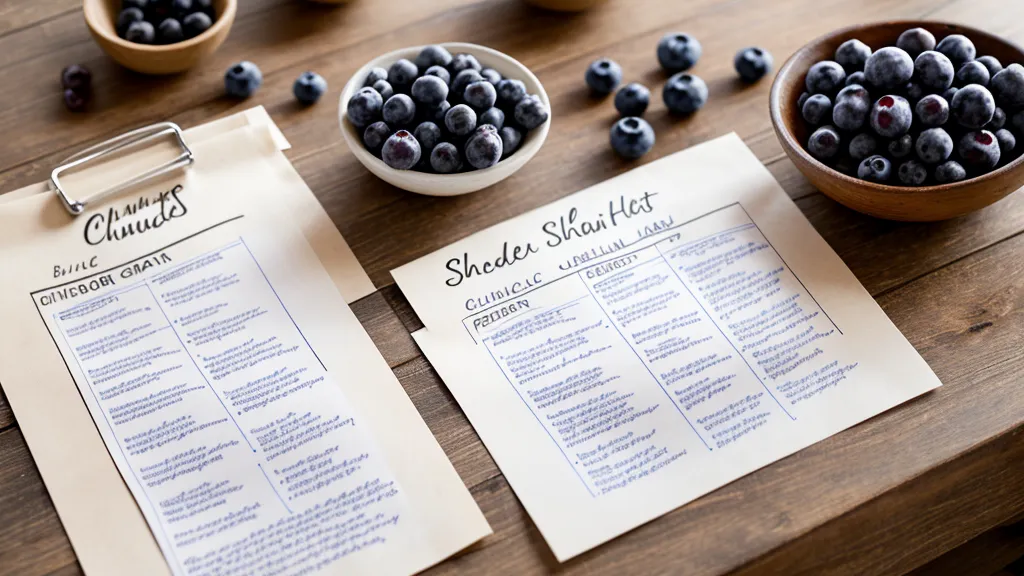
Early on in this journey, I spent way too much time in denial. I’d eat the 'healthy' wrap at lunch and then wonder why I was practically vibrating with anxiety and exhaustion by 3:00 PM. It wasn’t until I actually sat down with my The Stained Cheat Sheet: How I Finally Mastered Glycemic Index Without a PhD that the lightbulb finally went on. That 'healthy' whole-wheat wrap? It was hitting my bloodstream almost as fast as a Snickers bar.
I started doing the math on our standard office lunches. A typical 'healthy' catered meal—a sandwich, a small bag of chips, and a cookie—is often packing over 80 grams of high-glycemic carbohydrates. For my body, that’s like trying to put out a grease fire with a cup of water. My blood sugar would rocket up, my insulin would scramble to catch it, and by the time I was in my 2:00 PM performance review meeting, I was in a total postprandial somnolence—otherwise known as the 'food coma' that makes you want to crawl under your desk.
Now, I aim for a total glycemic load that doesn’t leave me breathless. I’ve swapped the wraps for massive 'salad bowls' I build at the local Whole Foods or prep at home. Instead of 80g of carbs, I’m hitting about 25g, mostly from fiber-rich beans or a little scoop of quinoa. The difference isn't just in the numbers; it’s in the fact that I can actually remember what my boss said during the afternoon sync.
The 'Deconstructed' Lunch Strategy
The social pressure in a Seattle tech office is real. When someone brings in 'thank you' donuts or the team goes out for pizza, you don't want to be the person sitting there with a gallon of water and a frown. It’s bad for morale, and honestly, it makes you feel like an outcast. I still miss that thick, crusty sourdough more than I’ll ever admit publicly—it was my emotional support carb for a decade.
But I’ve become the queen of the deconstructed lunch. If the team orders pizza, I eat the toppings off three slices and pair it with a bag of snap peas I keep in the office fridge. If it’s a taco bar, I skip the flour tortillas and make a 'taco salad' with double the guacamole and black beans. I’ve found that preparing dried beans at home and bringing a small container to add to office salads makes a huge difference in how full I feel.
I also keep a 'survival kit' in my desk. It’s got raw almonds, some high-quality jerky, and a few packets of apple cider vinegar. It sounds weird, I know, but I’ve learned that a quick vinegar-and-water shot before a high-carb meal can actually help blunt the spike. It’s one of those little 'lab experiments' I’ve tried after reading about how to use apple cider vinegar to lower post-meal glucose. Does it taste great? No. Does it keep me from feeling like a zombie? Absolutely.
The Sunday Lab Session
If I don't prep on Sunday, I fail on Monday. That is the cold, hard truth of suburban HR life. My kitchen in the Seattle burbs becomes a low-GI test lab every Sunday afternoon. I roast trays of cauliflower, grill chicken breasts, and portion out 'emergency jars' of overnight oats using steel-cut oats, which have a much lower GI than the instant stuff.
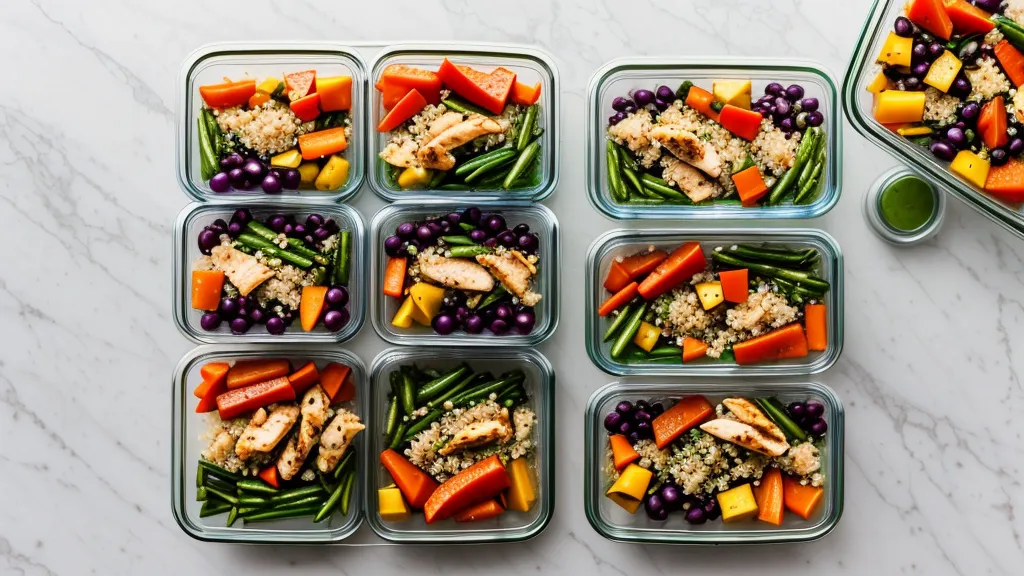
I’ve realized that I can’t rely on the office environment to support my health. The office environment is designed for convenience, not for someone trying to keep their A1C out of the danger zone. I usually have a podcast playing while I chop veggies, trying to make the process feel less like a chore and more like a self-care ritual. I’ve written about this whole messy process in My Sunday Survival Guide: How I Prep a Week of Low-GI Meals Without Losing My Mind if you want to see exactly how I organize my fridge.
When I’m feeling particularly frustrated—usually on a Wednesday when someone brings in those soft, frosted sugar cookies from the grocery store—I remind myself why I’m doing this. I remember the panic I felt in January when my numbers were going the wrong way. I think about my daughter and the fact that I want to have the energy to keep up with her, not just survive my workday. It’s not about the cookie; it’s about the identity I’m building as someone who finally takes her health as seriously as her career.
Tools, Progress, and the 5.7% Phone Call
Back in March, I got the phone call that changed everything. After 18 weeks of this 'kitchen lab' lifestyle, my A1C had dropped from 6.1% to 5.7%. I was officially back in the 'normal' range, though just barely. I cried right there at my desk, then immediately felt guilty because I had a stack of open enrollment forms to process. It wasn't a 'cure'—I still have to be careful every single day—but it was proof that the 'deconstructed' pizzas and the vinegar shots were actually doing something.
I’ve also started being a bit more open with my coworkers about what I’m doing. It turns out, I’m not the only one struggling. Once I stopped hiding my 'weird' lunches, other people started asking me for tips. I even shared my Sugar Defender review with a colleague who was curious about how I was managing my afternoon cravings. I’m still cautious with supplements—I always tell people to talk to their own doctor first, just like I did—but it’s been nice to feel like I’m not alone in this metabolic trenches.
Here are my current non-negotiable rules for the work week:
- The Fiber First Rule: I always eat the salad or the veggies before I touch the protein or the 'slow' carbs. It acts like a buffer for my blood sugar.
- The 10-Minute Lap: After any big lunch, I walk three laps around our office parking lot. It doesn't matter if it's drizzling (this is Seattle, after all). The movement helps my muscles soak up that excess glucose.
- The Hydration Hack: I carry a 32oz insulated bottle everywhere. If I think I'm hungry for a breakroom snack, I drink 10 ounces of water and wait ten minutes. Half the time, I was just thirsty.
- The Costco Rotisserie: My Sunday prep often starts with two Costco chickens. I shred them for salads, soups, and 'protein snacks' throughout the week. It's cheap, easy, and low-GI compliant.
Look, I’m not perfect at this. There are still days when the stress of a difficult termination or a budget shortfall makes me want to dive headfirst into a bag of sourdough rolls. And sometimes, I do eat the bread. But the difference now is that I don't let one bad lunch turn into a bad month. I just go back to my 'lab,' check my cheat sheet, and start again on Sunday.
If you’re sitting at your desk right now, feeling like a fraud because you’re supposed to be 'healthy' but your blood sugar says otherwise, just know that I see you. You don't have to change everything today. Just start by peeling the bread off your sandwich tomorrow. One swap at a time, we’re going to figure this out.